
Best Camping Sleeping Pad in 2026: Top Picks for Every Sleeper
Find the best camping sleeping pad for warmth, comfort, and packability. We compare self-inflating, foam, and air pads to help you sleep better outdoors.
Use this guide for
Better camping decisions, faster trip planning, and clearer gear choices. Use this article as your starting point, then keep going with related camping guides and practical help articles below.
A good night's sleep in the backcountry starts from the ground up — literally. Your sleeping pad does more than cushion you from rocks and roots. It provides critical insulation between your body and the cold ground, and without it, even the warmest sleeping bag will leave you shivering by midnight. Whether you're car camping or thru-hiking, choosing the best camping sleeping pad for your needs is one of the most important gear decisions you'll make.
Why Your Sleeping Pad Matters More Than You Think
Most campers obsess over tents and sleeping bags, but underestimate the importance of a quality pad. Here's what a sleeping pad actually does for you:
- Insulates from the ground — The ground draws heat away from your body far faster than cold air does. Your pad's R-value measures how well it resists heat loss.
- Cushions pressure points — A flat, rocky surface makes for miserable sleep, especially for side sleepers.
- Reduces moisture transfer — Ground moisture can seep into your sleeping bag. A pad creates a barrier that keeps your bag dry.
A sleeping pad with an R-value of 2 is fine for summer camping. For three-season use, aim for R-3 or higher. Winter camping calls for R-5+, often by stacking two pads.
Types of Camping Sleeping Pads

Self-Inflating Pads
Self-inflating pads combine open-cell foam with an air chamber. Open the valve and the foam expands, drawing air in automatically. Top them off with a few breaths if needed.
Best for: Car campers and weekend backpackers who want a balance of comfort and insulation without fussing with a pump.
Pros: Easy to use, good insulation, comfortable Cons: Heavier and bulkier than ultralight air pads
Closed-Cell Foam Pads
Foam pads are the simplest, most durable option. They can't be punctured and double as a sit pad or windbreak.
Best for: Ultralight backpackers, budget campers, and anyone who wants a bombproof backup pad.
Pros: Extremely lightweight (the lightest option), indestructible, cheap Cons: Bulky to pack, lower R-value per ounce than air pads
Inflatable Air Pads
Air pads use baffled air chambers (sometimes filled with down or synthetic insulation) for a plush sleeping surface at minimal weight. They require a pump sack or built-in inflation system.
Best for: Backpackers who prioritize packability and comfort and don't mind the extra care needed to avoid punctures.
Pros: Lightest and most packable, highest comfort level, wide R-value range Cons: Puncture risk, more expensive, slower to set up
What to Look For in a Camping Sleeping Pad
R-Value
Match your pad's R-value to your coldest expected conditions. The higher the number, the warmer the pad:
- R-1 to R-2: Summer camping
- R-3 to R-4: Three-season (spring/fall)
- R-5+: Winter and alpine camping
Weight and Packability
For backpacking, every ounce matters. Self-inflating pads typically weigh 1–3 lbs. High-end inflatable air pads can weigh under 1 lb. Foam pads are the lightest at 6–12 oz but strap to the outside of your pack.
Dimensions
Check the pad's length (regular vs. long) and width (narrow, regular, wide). If you're a restless sleeper or a larger person, a wider pad prevents middle-of-the-night roll-offs.
Durability
Thicker fabrics resist punctures better but add weight. Self-inflating foam pads are the most puncture-resistant. Always carry a patch kit with inflatable pads.
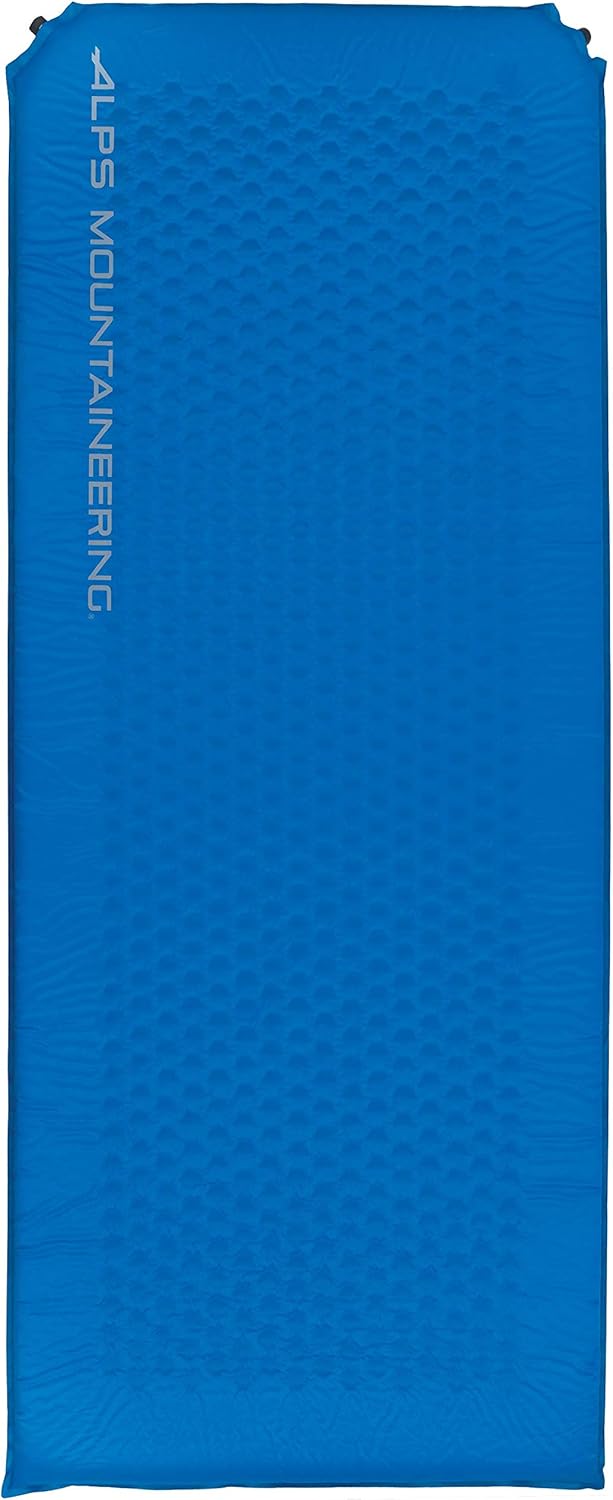
Our Top Pick: ALPS Mountaineering Flexcore Self-Inflating Air Pad
For most campers — especially car campers and three-season backpackers — the ALPS Mountaineering Flexcore Self-Inflating Air Pad hits the sweet spot of comfort, insulation, and ease of use. The open-cell foam core self-inflates quickly, provides solid insulation for three-season conditions, and the sleeping surface is thick enough to cushion uneven ground.
It packs down reasonably well for a self-inflating pad and rolls up neatly with the included straps. If you want a pad that just works without any fuss, this is the one.
Complete Your Sleep System
A great sleeping pad works best alongside a sleeping bag rated for the conditions you expect. The Teton Celsius Sleeping Bag is available in 25°F, 20°F, and 0°F ratings, giving you an option for any season. Pair it with the Flexcore pad for a reliable three-season sleep system that won't break the bank.
Tips for Getting the Most Out of Your Sleeping Pad
- Inflate fully — A partially inflated self-inflating pad is less comfortable and loses some insulation value. Top it off with a few breaths.
- Use a ground cloth — A tarp or footprint under your tent reduces abrasion on the pad's underside.
- Air it out — After each trip, store self-inflating pads unrolled with the valve open. This extends the foam's life and prevents permanent compression.
- Carry a repair kit — A small patch kit weighs almost nothing and can save a trip if your inflatable develops a leak.
- Layer in winter — Stack a thin foam pad under your main pad to boost R-value significantly without much added weight.
Final Thoughts
The best camping sleeping pad is the one matched to your camping style and the conditions you'll face. Self-inflating pads offer the best all-around value for most campers. Foam pads win on durability and simplicity. Air pads excel for backpackers who need ultralight packability.
Whatever you choose, don't underestimate this piece of kit. A quality sleeping pad is the difference between waking up refreshed and ready to hike, or spending the day trying to recover from a cold, uncomfortable night. Invest in a good one and your entire camping experience improves.